

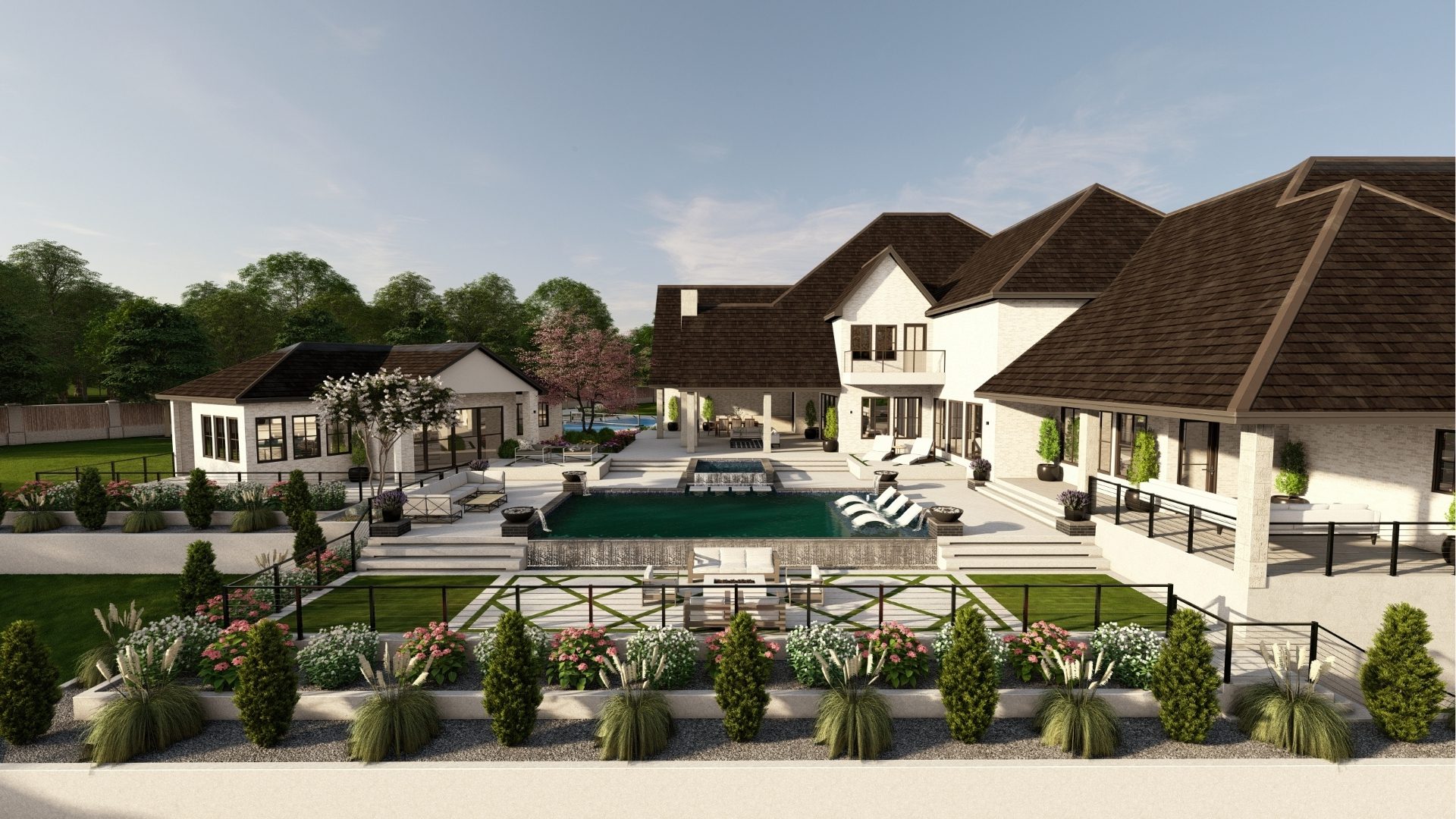

Most contractors think design is just about making a project look good. The top-performing contractors know design is actually a profit tool.
Good design reduces confusion, speeds up approvals, increases project size, and minimizes costly changes during construction. Instead of competing on price, contractors who use professional design compete on vision, clarity, and confidence.
When clients clearly see the outcome before construction begins, they make faster decisions and feel comfortable investing more into the project.
Below is how top contractors strategically use design to increase profit margins.
1. Design Helps Clients Upgrade Their Budget With Confidence
Many clients start with a safe budget because they cannot fully visualize the final result. A clear design removes uncertainty and allows them to see the full potential of their property.
When clients understand the layout, materials, and experience of the space, they often choose to upgrade features such as:
- Larger patios
- Outdoor kitchens
- Fire features
- Water features
- Premium materials
- Lighting packages
Instead of selling individual items, contractors are selling a complete lifestyle. This often turns a $40k project into a $75k project, or a $150k project into a $250k+ outdoor living space.
Design increases perceived value before construction even begins.
2. Design Reduces Price Shopping
Without a design, clients often send the same rough idea to multiple contractors just to compare prices.
When a detailed design is presented, the conversation changes. The contractor becomes the expert who created the vision. This makes the project harder to compare purely on price.
Clients are more likely to choose the contractor who helped them see the full plan instead of someone who simply offers a lower estimate.
Design creates differentiation.
3. Design Minimizes Costly Mid-Project Changes
One of the biggest profit killers is change orders caused by misunderstandings. When the layout is unclear, clients may request adjustments during construction such as:
- Moving patios
- Changing material selections
- Adjusting pool placement
- Modifying seating layouts
- Adding features late in the process
Each change slows down the job, increases labor hours, and can disrupt scheduling.
A clear design answers questions before construction begins, keeping the project on schedule and protecting margins.
4. Design Improves Material Planning and Labor Efficiency
Professional design allows contractors to plan projects with greater accuracy.
This leads to:
- More precise material quantities
- Fewer wasted materials
- Better crew scheduling
- Reduced downtime on-site
- Clear construction sequencing
Efficient projects protect profit margins by avoiding unnecessary labor costs and delays. Clear 2D plans combined with realistic 3D visuals allow teams to build faster with fewer questions.
5. Design Builds Trust and Positions You as a Premium Contractor
Clients are more willing to invest in a contractor who presents a clear plan. Professional design communicates:
- Organization
- Experience
- Attention to detail
- Long-term thinking
- Quality standards
Contractors who present structured designs often win higher-quality clients who value expertise over the lowest price.
This allows contractors to maintain healthy margins while delivering better results.
6. Design Helps Sell Larger Projects
When clients see how spaces connect and flow together, they often choose to complete more of the project at once.
For example: Instead of installing only a patio, clients may decide to include:
- outdoor kitchen
- shade structure
- seating areas
- landscape lighting
- planting design
- pathways
A complete plan increases total project value while reducing the cost per square foot of mobilization.
Larger projects typically produce stronger margins.
7. Design Creates a Repeatable Sales Process
Top contractors use design as part of a structured sales system.
Typical process:
1. Client consultation
2. Site analysis
3. Concept design
4. Presentation
6. Revisions
7. Final approval
8. Construction
This structured workflow makes revenue more predictable and reduces time spent going back and forth with unclear expectations.
A repeatable process helps contractors scale efficiently.
8. Design Helps Close Jobs Faster
Clients take longer to decide when they are unsure about the outcome.
Design reduces hesitation by answering common questions:
- How will the space feel?
- How much usable space will there be?
- Where will people gather?
- How will lighting look at night?
- How will materials work together?
When clients can visualize the result, decision-making becomes easier. Faster decisions improve cash flow and allow contractors to take on more projects each season.
Conclusion
Top contractors do not treat design as an extra step. They treat it as a core part of their business strategy.
Design increases confidence, increases project size, reduces mistakes, and helps contractors stand out in competitive markets. The contractors with the strongest margins are often the ones who invest in clarity before construction begins.
Design is not just about aesthetics. It is a profit tool.