

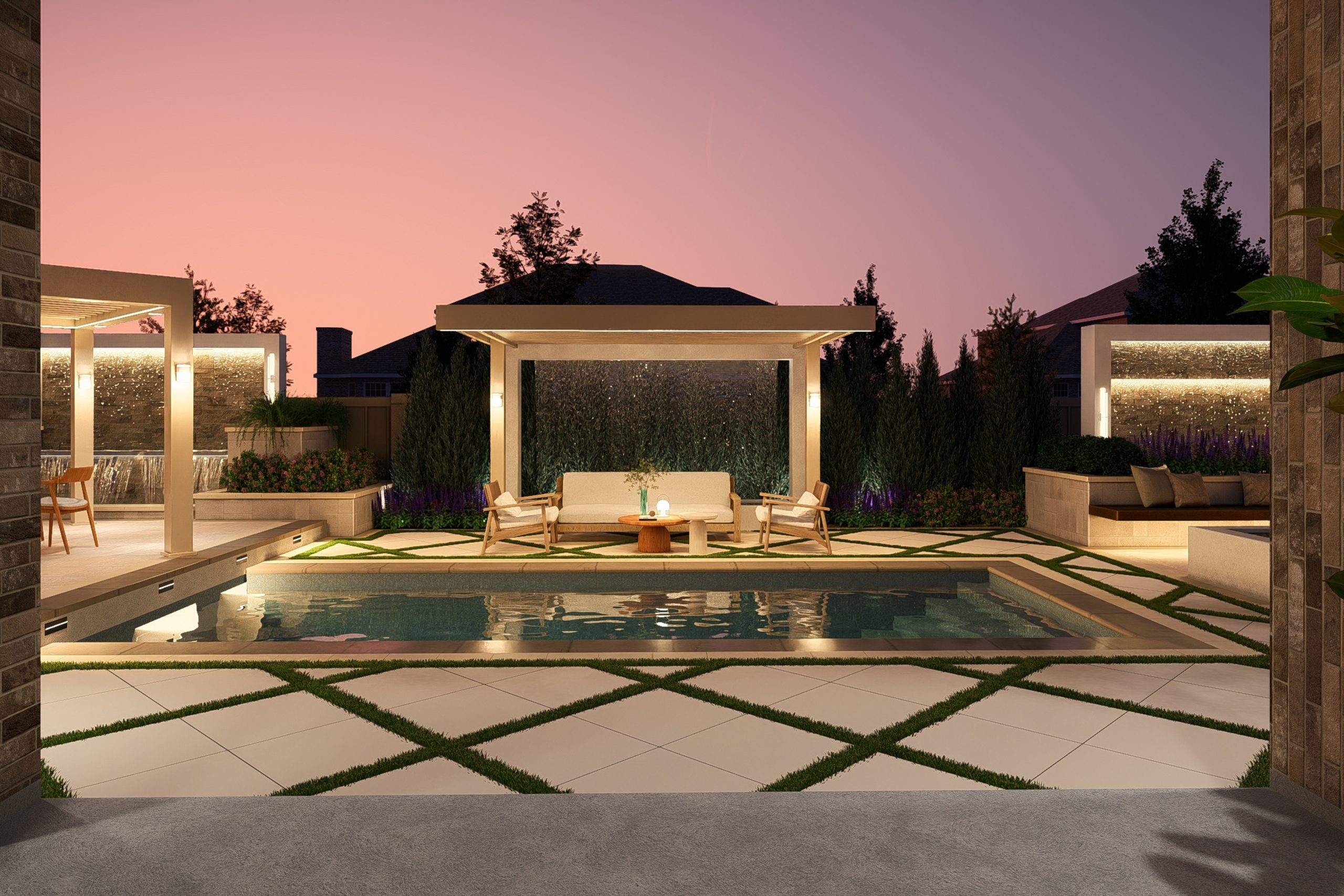

The most successful outdoor spaces do not feel overbuilt. They do not feel empty either. They feel intentional.
That feeling comes from one critical design principle: balance between hardscape and softscape. Hardscape gives structure and function. Softscape brings life and movement.
When you learn to balance the two, your projects feel complete, cohesive, and high-end.
Here is how to approach that balance strategically.
Understanding the Difference
Before balancing, define the roles.
Hardscape creates usable space and architectural definition. Softscape softens edges, adds texture, and creates atmosphere. Neither works well alone.
Hardscape includes:
- Patios
- Driveways
- Pool decks
- Retaining walls
- Outdoor kitchens
- Pergolas and built structures
Softscape includes:
- Trees
- Shrubs
- Groundcover
- Lawn or turf
- Planter beds
- Seasonal color
Start With Function, Not Ratio
There is no magic 50/50 rule. The correct balance depends on how the space will be used.
Ask:


The function should drive hardscape layout first. Softscape then enhances and completes it.
If you design plants first and function second, the space can feel impractical. If you design only hardscapes, it can feel sterile.
Use Hardscape to Define Zones
Well-designed hardscape creates clear zones:
- Dining
- Cooking
- Lounging
- Fire feature seating
- Poolside relaxation
Once zones are defined, softscape can:
- Frame those zones
- Create privacy
- Guide traffic flow
- Add depth and dimension
Think of hardscape as the bones and softscape as the skin and texture.
Avoid the “Concrete Box” Look
One of the most common mistakes in outdoor projects is over-hardscaping. Strategic planting breaks up large paved areas and makes them feel inviting. Greenery adds scale and human comfort.
Too much paving:
- Raises surface temperatures
- Reduces visual warmth
- Increases water runoff
- Makes the yard feel smaller
Simple techniques include:
- Integrated planter pockets within patios
- Tree cut-outs in decks
- Raised beds along retaining walls
- Layered planting at fence lines
Layer Softscape for Depth
Softscape should not be an afterthought. Layering creates depth, which makes even smaller yards feel larger and more dynamic.
Use layers:
- Canopy trees for height
- Mid-level shrubs for structure
- Low plantings for texture
- Accent plants for focal points
Flat planting plans often feel unfinished. Dimension is what elevates a design.
Match Material Tone With Plant Palette
Hardscape materials influence plant selection.
For example:
- Warm-toned stone pairs well with earthy greens and softer foliage
- Modern concrete or porcelain works beautifully with structured grasses and architectural plants
- Rustic materials complement layered, naturalistic planting
When materials and plant palettes complement each other, the entire project feels intentional instead of pieced together.
Think Long-Term Maintenance
Balance is not only visual. It is operational. Clients who want low maintenance may benefit from:
- Defined planting beds
- Drought-tolerant species
- Mulched areas instead of high-maintenance turf
- Automated irrigation systems
If maintenance is ignored, softscape can overwhelm hardscape over time, disrupting the intended balance.
Design With Scale in Mind
Oversized hardscape in a small yard feels heavy. Undersized patios in a large yard feel disconnected.
The same applies to plant material. Tiny shrubs next to massive retaining walls feel disproportionate. Scale should feel harmonious between:
- Structure
- Open space
- Greenery
Professional visual planning helps ensure proportions are correct before installation begins.
Create Visual Rest Points
Every outdoor project needs contrast. The eye should move naturally through the space without feeling overwhelmed.
If everything is lush planting, the space can feel chaotic. If everything is structured paving, the space can feel rigid. Balance comes from rhythm:
- Open lawn areas
- Defined patio spaces
- Grouped planting beds
- Architectural features
Final Thoughts
Balancing hardscape and softscape is not about percentages. It is about purpose. When both are designed intentionally and integrated from the beginning, outdoor projects feel cohesive, functional, and elevated.
Hardscape provides usability and structure.
Softscape provides warmth and life.
The best outdoor spaces are not dominated by stone or by plants. They are shaped by both working together.