


Rooted in symmetry, craftsmanship, and layered planting, traditional landscapes create outdoor rooms that feel gracious in every season. This guide distills the approach—essentials, planning, built works, and palette—so homeowners and contractors can craft gardens with enduring curb appeal and daily usability.
Essentials of Classical Garden Craft (Proportion, Order, Longevity)
Hallmarks of the Style
- Ordered geometry: clear axes, mirrored beds, balanced façades.
- Right-sized parts: paths, lawns, and borders scaled to the architecture.
- Outdoor rooms: hedges, fences, trellises, and walls define use areas.
- Materials with memory: brick, natural stone, timber, and metal that weather gracefully.
- Evergreen backbone: year-round structure with layered seasonal color.
How It Comes Together
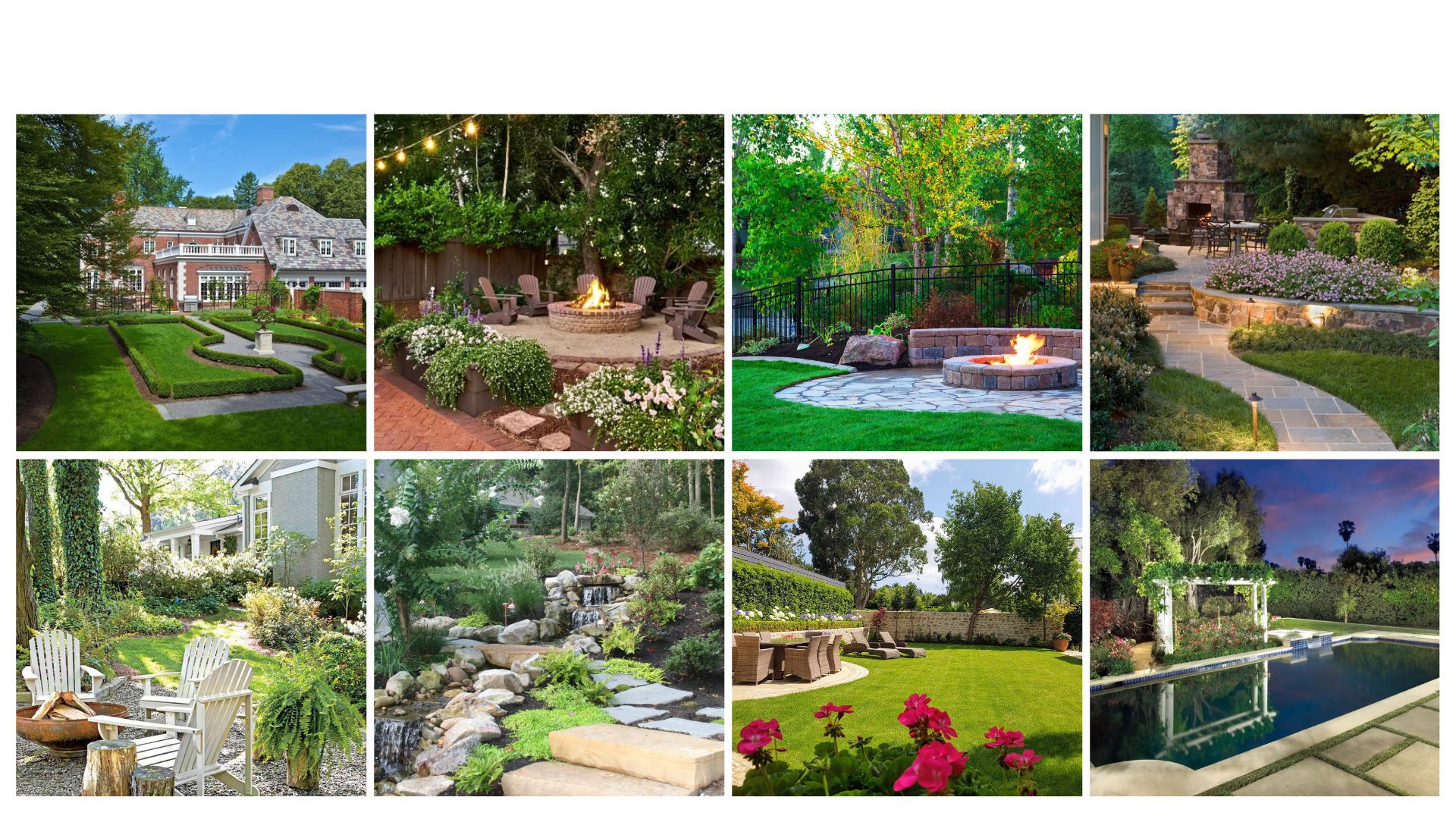
- Anchor a centerline: align from a main door or window to a focal piece (urn, statue, specimen).
- Frame the lawn: clipped hedging or low stone edges keep geometry crisp.
- Repeat patterns: echo paving bonds, hedge species, and border palettes through each room.
- Mind the approach: entries read first—use proportionate steps, risers, and lighting to set tone.
Time-Tested Components
- Hardscape: clay brick (running bond, basketweave, herringbone), bluestone/flagstone, granite setts.
- Joinery: painted pergolas, lattice screens, classic gates with simple profiles.
- Metalwork: wrought or powder-coated steel for arbors, railings, and lanterns.
- Planting: boxwood/yew bones; hydrangea, roses, peonies, lavender, catmint; hornbeam/magnolia as structure trees.
Planning the Grounds: From Site Study to Scaled Layouts
Site Intelligence First
- Survey & grades: confirm boundaries, slopes, drainage paths, and existing trees.
- Architecture cues: take alignments from doors, window centers, and façade rhythm.
- Water & soils: design 1–2% falls, capture downspouts, and amend beds for long-lived perennials.
Drawings That Build
- Concept diagram: main axis, cross-axes, framed greens, and focal anchors.
- Dimensioned plan: walks 36–48″+; terraces sized for furniture clearances and circulation; border depths for layered planting.
- Planting plan: evergreen structure with 3–5 repeating perennials in drifts for a unified read.
- Lighting plan: lanterns at entries, subtle tree uplights, step/riser safety illumination.
Buildability & Care
- Subgrade & edges: compacted base below masonry; soldier courses, steel edging, or stone curbs.
- Irrigation: drip in borders, high-efficiency nozzles for lawn, smart controller with rain sensor.
- Spec set: material schedule, laying patterns, mortar/finish notes, hardware and paint codes.
Signature Elements & Built Works (Character Without Clutter)
Ground Plane & Structures
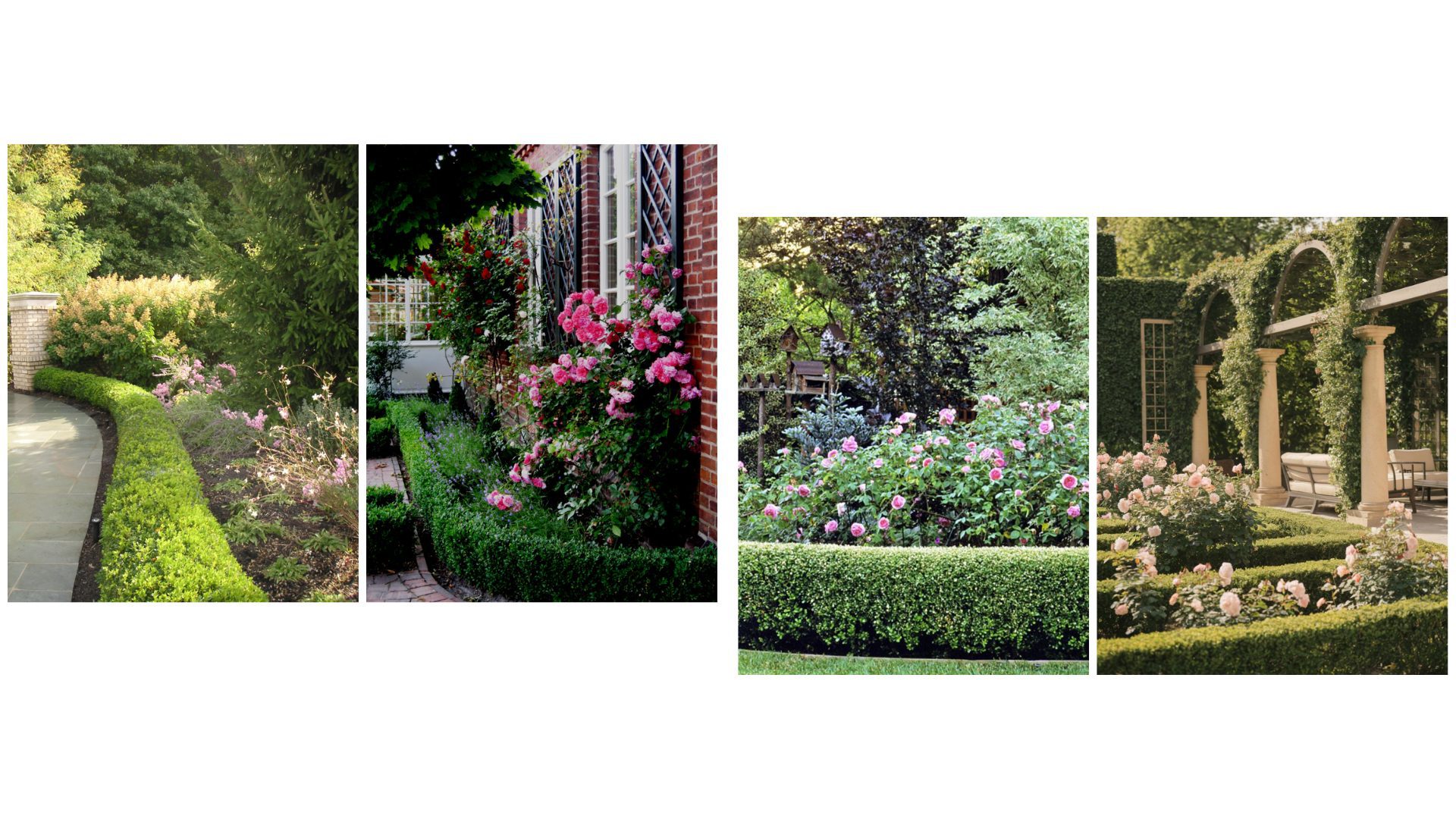
- Brick terraces & walks: herringbone fields with contrasting borders for definition.
- Low stone walls & pillars: set room edges, hold grade, and add permanence.
- Pergolas & arbors: proportioned posts, simple rafters, and vines for filtered shade.
Focal Features
- Classical water: tiered fountain, rill, or bowl at the end of an axis.
- Urns & plinths: seasonal planting and vertical punctuation where paths meet.
- Green theater: clipped hedges and framed lawns to quiet surrounding borders.
Light & Finishing Touches
- Warm lanterns (2700–3000K): entries, gates, and terraces.
- Selective uplight: specimen canopy, masonry texture, pergola columns.
- Discreet guidance: soft path and step lights that protect night character.
Palette & Finishes (Color, Tone, Texture)
Core Hues
- Garden greens: sage to deep emerald for hedges, lawns, and evergreen bones.
- Masonry warms: terracotta brick, buff clay, weathered stone.
- Painted classics: creams, off-whites, or deep greens for pergolas and trim.
- Soft florals: dusty blush, lavender, blue—from roses, hydrangea, and cottage perennials.

Composing the Scheme
- Echo the house: tie brick/stone tone to the façade and repeat it in borders and steps.
- Let plants carry color: keep hardscape restrained; use flowers and containers for accents.
- Consistency reads formal: repeat hedge species, edging type, and bond patterns across rooms.
Closing Thoughts: Classic Form, Everyday Use
Traditional landscapes endure because their structure is clear: strong axes, scaled spaces, honest materials, and living bones that hold the garden through every season. Design the framework, specify durable details, and repeat a disciplined palette—the result is a welcoming, heirloom-quality garden that adds value and delight for years to come.