

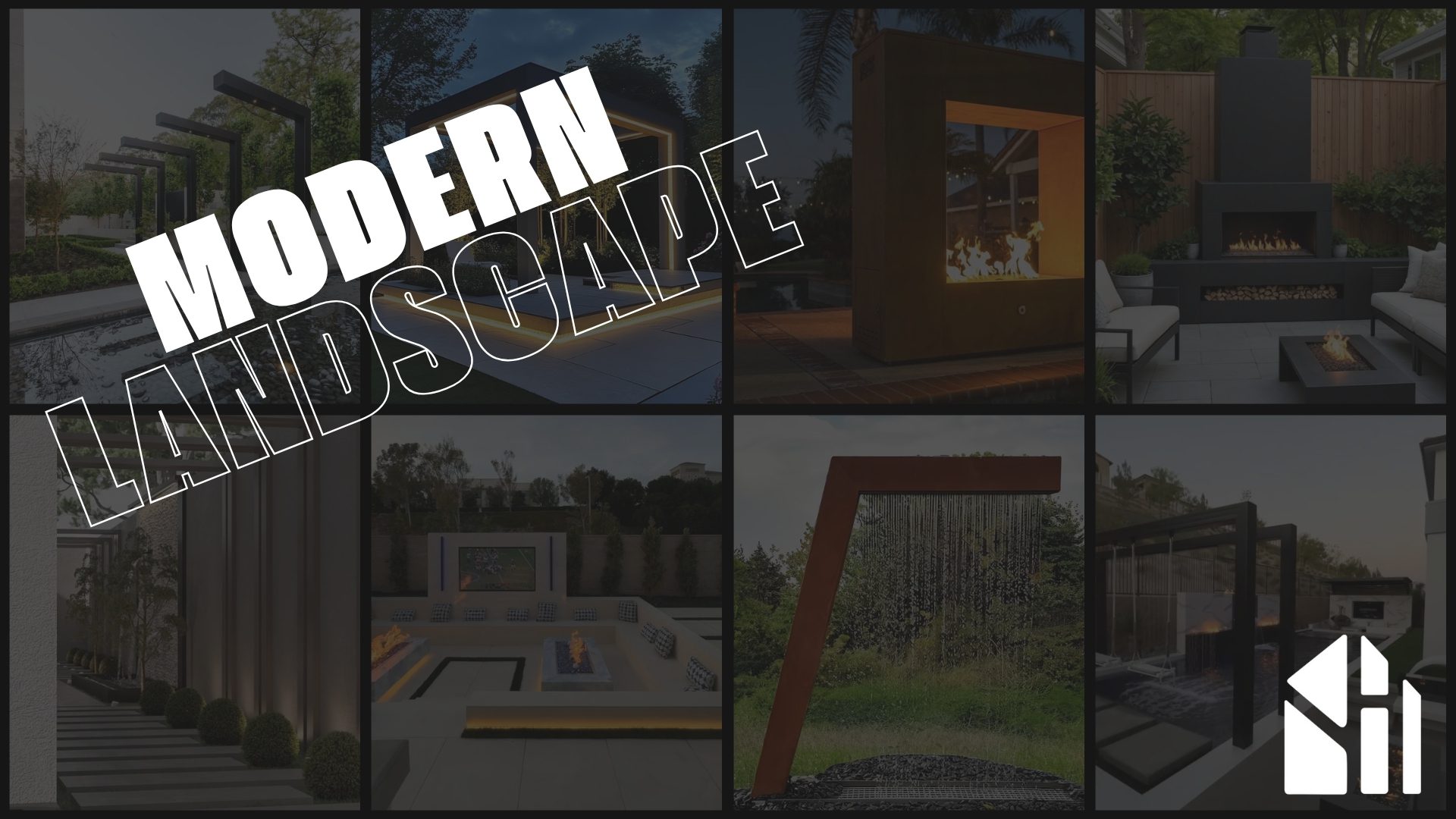

Modern landscape design turns outdoor areas into purposeful, low-maintenance extensions of your home. This guide breaks down the essentials—principles, plans, features, and colors—so homeowners and contractors can create sophisticated, durable, and truly modern outdoor living spaces.
Modern Landscaping: Principles, Layout & Materials (What Makes a Space “Modern”)
Core Principles (for quick wins)
- Simplicity over excess: fewer elements, stronger composition.
- Geometry & order: clean lines, right angles, crisp edges.
- Form follows function: every feature has a job.
- Material honesty: concrete, steel, stone, and warm woods.
- Seamless flow: indoor–outdoor continuity, uncluttered circulation.
Layout Strategy (how to shape the space)
- Zone the yard into living, dining, cooking, and quiet areas.
- Use long sightlines and axial paths for a spacious feel.
- Layer height thoughtfully: groundcovers → shrubs → sculptural trees.
- Edge everything: steel/stone edging to keep lines razor-clean.
Material Palette (modern staples)
- Hardscape: smooth concrete, large-format pavers, porcelain slabs, gravel.
- Carpentry: slatted cedar/ipe, shadow-gap details, integrated benches.
- Metal: powder-coated steel, corten accents, minimalist rails.
- Planting: agave, boxwood, lomandra, olive, Japanese maple.
Modern Landscape Plans (From Site Read to Scaled Drawings)
Start with Site Intelligence
- Measure property lines, grades, utilities, doors/windows.
- Map sun/wind; add shade and shelter where needed.
- Design drainage and permeable zones first.
Translate Vision → Plan
- Concept diagram for zones, axes, masses.
- Dimensioned plan using a fixed module (24"/36").
- Planting plan with repeated species in drifts.
- Lighting plan: paths, steps, trees, linear accents.

Buildability & Maintenance
- Expansion joints, step risers 4"–6", drainage falls 1–2%.
- Drip irrigation zoned by water need; smart controller + rain sensor.
- Specs: materials schedule, edging types, finishes, hardware.
Modern Features & Elements (High-Impact, Low-Clutter)
Hardscape Moves
- Floating concrete pads set in gravel or turf.
- Linear fire features as social anchors.
- Monolithic steps & landings with shadow-gap details.

Architectural Add-Ons
- Slim-frame pergolas with rectilinear shade patterns.
- Built-in seating/planters to reduce furniture clutter.
- Minimalist water features: rills, sheet weirs, reflecting pools.
Lighting & Tech
- Low-glare LEDs; prefer downlighting.
- Graze textured walls; edge paths; uplight specimen trees.
- Smart scenes for dining, entertaining, and late night.
Modern Landscape Colors (The Palette That Sells the Look)
Core Palette
- Charcoal/black for structure and contrast.
- Crisp white/off-white to bounce light.
- Warm wood tones (teak, cedar, ipe) to soften.
- Greens/silvers from planting to calm the scene.

How to Combine
- Choose one dark + one light + one wood as your base.
- Repeat accents (bronze, corten) sparingly and consistently.
- Let plants supply subtle color shifts; avoid busy hardscape mixes.
Conclusion: Design Less, Achieve More
Modern landscaping is clarity in built form—balanced lines, honest materials, and planting that behaves like architecture. Start with function, draw to a module, specify durable finishes, and repeat your moves. The result is a serene, high-performing outdoor space that looks fresh for years.